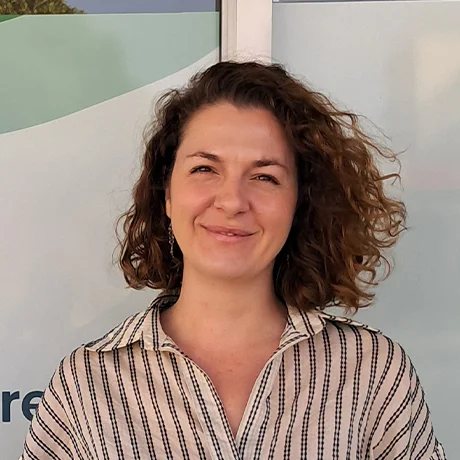
Hi I’m Maddy, Community Engagement Lead for the Medicare Mental Health Centres at Logan and Redlands.
Maleny is where I grew up and will always feel like home. My parents met there before moving to Brisbane to start their family, and we returned to Maleny when I was about five years old. I lived there until I was thirteen, and my family still calls it home today.
Perched high on the Blackall Range, Maleny is one of the most beautiful parts of the country. Its mountain views stretch for miles and, from some vantage points, you can see all the way to Caloundra and the coastline beyond. The Obi Obi Creek winds through the centre of town, providing a home for platypus and adding to the peaceful character of the region. I feel incredibly fortunate to have such a strong connection to this place.
While I could not find a traditional First Nations place name for Maleny, there is also no clear agreement on how the town received its current name. Some believe it may have originated from the Scottish name “Malleny.”
The Traditional Custodians of this area are the Jinibara people, whose connection to Country spans generations. The Jinibara nation comprises several clan groups, including the Dungidau around Kilcoy and Mount Archer, the Dala of the Woodford and Mount Mee region, the Nalbo of the Blackall Range and much of the Glass House Mountains, and the Garumngar people between the Brisbane River and the southern reaches of Brisbane Forest Park.
Anyone who has travelled through the Sunshine Coast hinterland knows how striking the Glass House Mountains are, especially Mount Tibrogargan standing tall and watchful against the skyline. As a child, I found him a little intimidating, his shape seeming stern as he looked out towards the ocean.
For the Jinibara and Kabi Kabi peoples, the Glass House Mountains are far more than dramatic landmarks. They are sacred places and part of an important creation story in which the mountains form a family.
According to this story, Tibrogargan is the father of the mountains and Beerwah the mother. One day, Tibrogargan saw the sea rising and called to his eldest son, Coonowrin, asking him to gather his siblings and help his pregnant mother to safety. But Coonowrin became frightened and fled, leaving his family behind. Angered by his son’s actions, Tibrogargan struck him, leaving him with the bent profile that earned him the name “Crookneck.” Filled with disappointment and sorrow, Tibrogargan turned away from his son and continues to face the ocean, keeping watch to this day.
Overcome with sadness, Coonowrin wept, and his brothers and sisters wept alongside him. Their tears are said to have formed the rivers and streams that flow through the landscape to the sea.
The mountains themselves each hold a place within this story, including Beerwah, Tibrogargan, Coonowrin, Tunbubudla, Beerburrum, Ngungun, Coochin, Tibberoowuccum, Miketeebumulgrai, Wild Horse Mountain, Elimbah and Cooee.
Today, many people are drawn to climb these mountains, yet for the Jinibara and Kabi Kabi peoples they remain sacred places of deep spiritual and cultural significance. Learning more about these stories has given me a greater appreciation of the landscape I grew up in and the histories and knowledge that have always existed there.
Reflecting on Maleny during National Reconciliation Week reminds me that the places we love are layered with stories, culture and connection, and that understanding these histories helps us see Country with greater respect and care.
As part of the Footprint celebration of National Reconciliation Week, we challenged all our staff to research the Traditional Custodians of the land which was special to them. It could be where they were born, or for those who have made Australia their home, it could be where they live or work, or just love to visit.